The Strength and Power Deficit in Senior Living
Strength training improves outcomes. But most programs fall short.
Resistance training delivers. So why isn’t it used more?
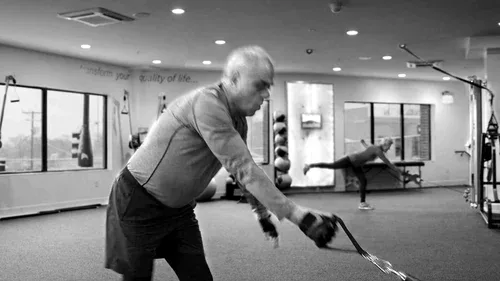
Resistance training is one of the most effective interventions for maintaining mobility, preventing falls, and improving quality of life in older adults.
But even with decades of data behind it, most senior living communities don’t implement it at the intensity or with the consistency that research recommends.
Those who recorded more strength training sessions were 75% less likely to experience a fall. [2]
JOURNAL OF AGING RESEARCH
Missed resistance training opportunities cost residents their independence and quality of life.
The evidence is clear

46% lower odds of death for older adults who strength train regularly [1]
75% fewer fall incidents with structured strength training [2]
111% strength improvement vs. non-exercisers in assisted living settings [3]

Only ~9% of older adults strength train at recommended levels [4]
What’s holding communities back?
- Awareness gap: Residents often don't understand what resistance training is or why it matters
- Staff training: Inconsistent supervision limits safety and adherence
- Program intensity: Many offerings fall below optimal training loads
- Perceived safety concerns: Misconceptions around fragility lead to overly cautious programming
"Even patients with recent health declines were open to resistance training — when supported by expert guidance.” [5]
BMC GERIATRICS
What successful communities do differently
Communities delivering the strongest outcomes follow three key principles:
- Start with why
Communities that build shared understanding across residents and staff see stronger participation. Resistance training is essential. Many still don’t realize why it matters. [5] - Train with purpose
High-performing communities offer resistance programs that align with current research on intensity, frequency, and personalization. [6] - Support every step
Change occurs when staff have the tools and confidence to lead. Tracking, encouragement, and leadership support turn programs into lasting routines. [5]
The result? Measurable progress, reduced fall risk, and more independent years for the people you serve.
A Better Model, Built for Senior Living
Making it easier to bridge the gap between research and results

Keiser’s STEP program was built to help senior living communities put research into action—without starting from scratch. It’s a structured, scalable approach to resistance training that meets older adults where they are and helps them progress safely.
What STEP delivers
Evidence-Based Programming: Progressive resistance training protocols designed around current research — not outdated assumptions.
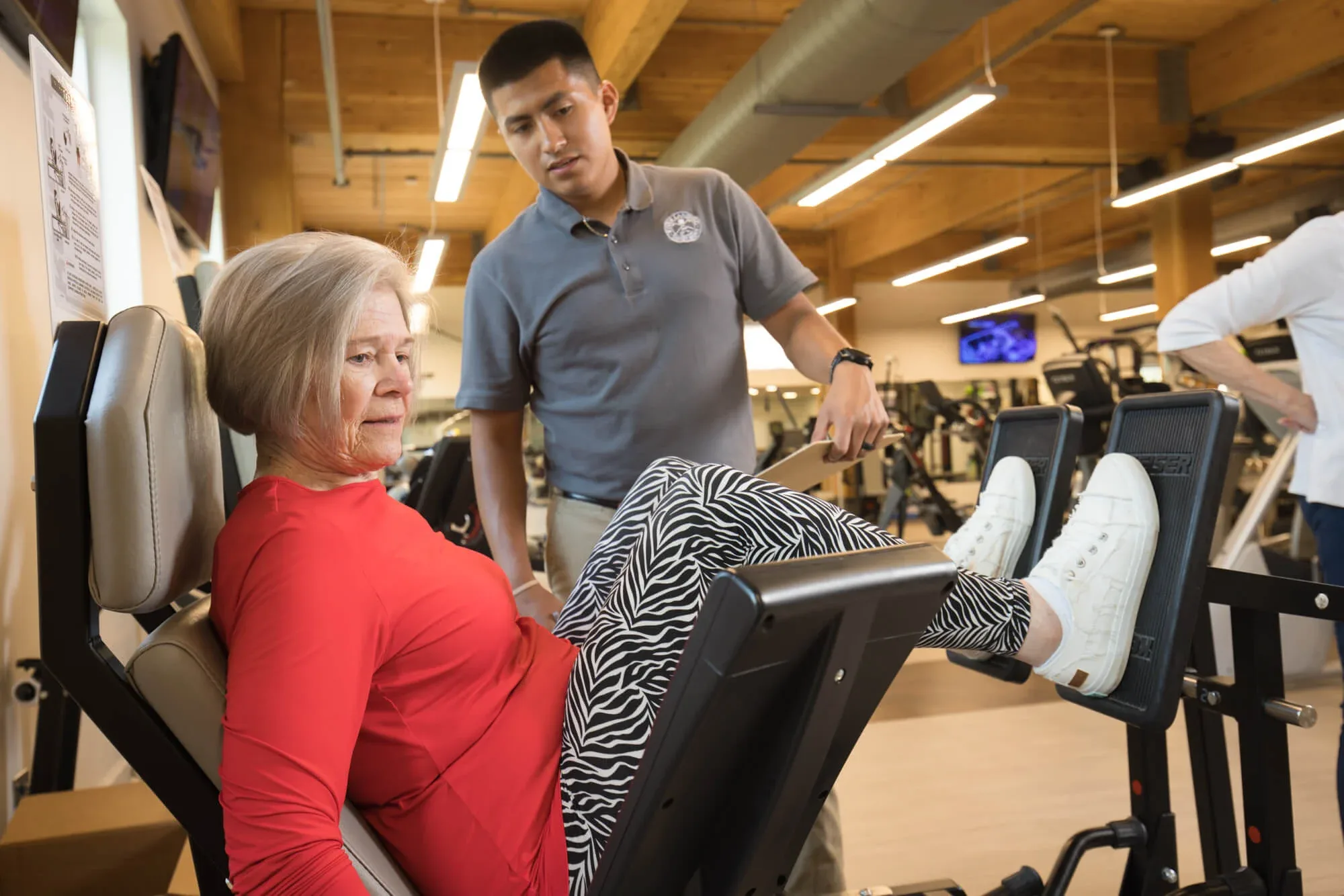
Advanced Equipment and Technology Keiser’s low-inertia machines allow older adults to train safer at effective intensities. Independently or with staff support. Keiser’s digital displays show measurable progress — giving every resident a reason to come back tomorrow.
Education & Engagement Tools: STEP includes tools and templates for staff training, resident engagement, and measurable outcomes tracking.
From research to results
Explore how STEP is helping communities strengthen outcomes with structured programming, staff support, and equipment built for older adults. Start by learning what the program includes and why it works.
Citations
[1] Kraschnewski, J. L., et al. “Strength Training and Mortality in Older Adults.” Analysis of the National Health Interview Survey (1997–2001) with 15-year follow-up. Older adults who strength trained at least twice per week had 46% lower odds of all-cause mortality. https://www.psu.edu/news/research/story/strength-training-helps-older-adults-live-longer
[2] Alvarez, K. J., et al. “Falls Reduction and Exercise Training in an Assisted Living Population.” Journal of Aging Research, 2015. Participants in a program based on the Boston FICSIT model showed a 111.3% improvement in muscle strength and 75% reduced odds of a fall compared to non-exercisers. https://pmc.ncbi.nlm.nih.gov/articles/PMC4541005/
[3] Fiatarone, M. A., et al. Boston FICSIT Study. The foundational model for structured, supervised resistance training in older adults. (Referenced and adapted in citation [2]; no direct link for the 111% stat.)
[4] Kraschnewski, J. L., et al. Penn State College of Medicine. NHIS data analysis showed that only ~9% of older adults meet recommended strength training guidelines (≥2x/week). https://www.psu.edu/news/research/story/strength-training-helps-older-adults-live-longer
[5] Hurst, C., et al. “Attitudes and Barriers to Resistance Exercise Training for Older Adults Living with Multiple Long-Term Conditions.” BMC Geriatrics, 2023. Older adults with recent health declines were willing to engage in resistance training—when supported by expert guidance. https://pmc.ncbi.nlm.nih.gov/articles/PMC10675908/
[6] Tøien, T., et al. “Heavy Strength Training in Older Adults: A Narrative Review.” Journal of Cachexia, Sarcopenia and Muscle, 2025. Despite decades of evidence, strength training has not fully arrived at the older adults’ doorsteps. High-intensity programs (≥80% of 1RM) are more effective than commonly prescribed low-to-moderate loads. https://pmc.ncbi.nlm.nih.gov/articles/PMC12003923/

Contact Commercial Sales